
Blog
Vivah Puja & Vivah Muhurat Booking in Varanasi: A Complete Guide for a Shubh Wedding

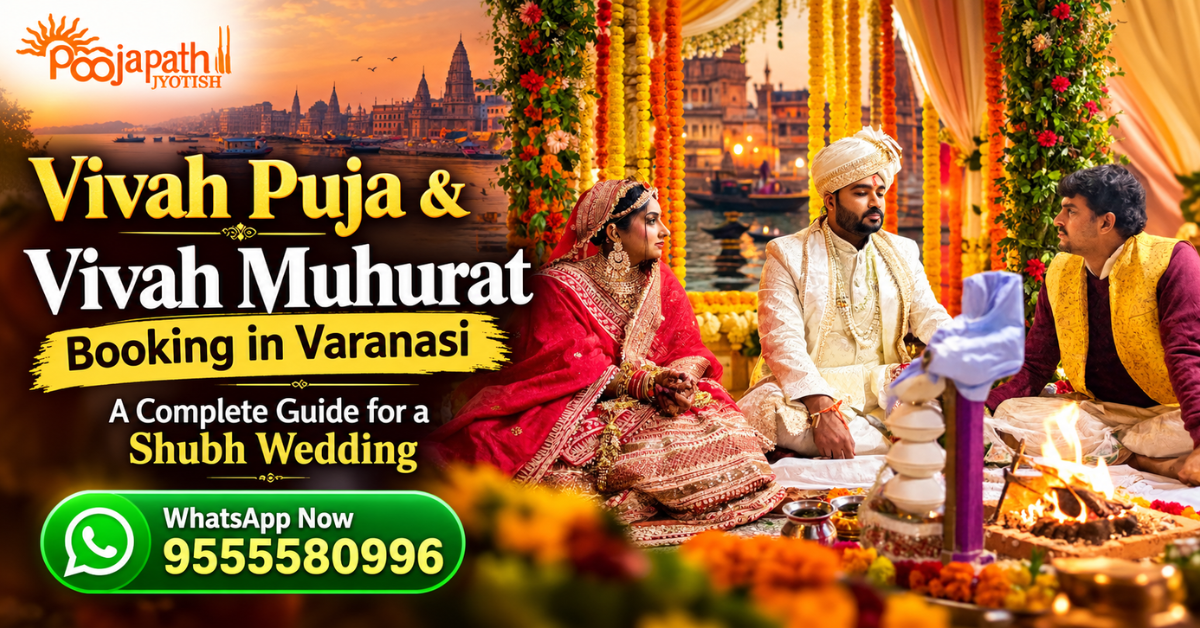
Marriage, or Vivah Sanskar, is one of the sixteen sacred Shodasha Samskaras in Hindu tradition, marking the union of two souls under the divine witness of Agni. In a city as spiritually significant as Varanasi, families from across India travel to have their Vivah Puja performed by experienced Vedic pandits who follow the traditional Kashi paddhati (ritual method). This guide, put together by our team of Varanasi-based purohits with years of combined experience conducting wedding rituals across the city, walks you through the vivah puja process, the importance of vivah muhurat, and transparent pricing for booking a verified pandit in Varanasi.
What Is Vivah Sanskar and Why It Matters
Vivah Sanskar is considered the most elaborate of the sixteen samskaras because it binds two individuals into a single dharmic and social unit. The ceremony is built around Vedic mantras invoked for Dharma (righteous duty), Praja (progeny) and Rati (companionship). Every step, from the Ganesh Puja that opens the ceremony to the final Ashirwad, is designed to invoke the blessings of the couple’s family deities and ancestors for a stable, prosperous married life.
Why Vivah Muhurat Cannot Be Skipped
The vivah muhurat is the astrologically calculated date and time for the wedding, determined from the Panchang after studying the nakshatra, tithi, and the placement of Guru and Shukra (Jupiter and Venus), since both planets should not be in their combust or set phase (Guru-Shukra Ast) for the marriage to be considered auspicious. Getting this wrong is one of the most common regrets families share after the wedding, which is why we recommend a personalised Vedic astrology consultation before finalising your wedding date.
How the Muhurat Is Actually Calculated
Our pandits begin by matching both families’ kundlis (Guna Milan) if this hasn’t already been done, then cross-check the shortlisted dates against the current Guru-Shukra Ast periods, the bride and groom’s individual dashas, and any Mangal or Rahu-Ketu doshas present in either chart. Malmas (Adhik Maas) and periods considered inauspicious for weddings, such as Chaturmas, are automatically excluded. Where a family has a preferred month for logistical reasons — a venue booking or relatives travelling from abroad — we work within that window to find the closest genuinely shubh date rather than simply picking the first available one.
What’s Included in a Traditional Vivah Puja
- Ganesh-Gauri Puja and Kul Devta Puja for the families
- Mandap Muhurat and Griha Shanti at the venue
- Vivah Sankalp — the formal ritual resolution
- Kanyadaan and Panigrahan
- Saptapadi — the seven vows taken around the sacred fire
- Sindoor Daan and final Ashirwad
A Typical Vivah Puja Timeline
While every family’s rituals vary slightly by region and tradition, most Varanasi vivah pujas we conduct follow a broadly similar sequence over one to three days depending on how many pre-wedding ceremonies are combined with the main event:
- A day or two before: Ganesh-Gauri Puja, Kul Devta Puja and Mandap Muhurat at the venue, along with Haldi and Mehendi if the family wants these performed with Vedic sankalp.
- On the wedding day, before baraat arrival: Griha Shanti and Var Puja at the groom’s side.
- Main ceremony: Kanyadaan, Vivah Sankalp, Panigrahan, Saptapadi around the sacred fire, and Sindoor Daan.
- Closing rituals: Final Ashirwad from both families and the presiding pandit.
Vivah Puja & Vivah Muhurat Pricing in Varanasi
| Service | Price Range (INR) |
| Vivah Puja (complete wedding rituals, priest team & sankalp) | ₹11,000 – ₹31,000 |
| Vivah Muhurat (Panchang-based shubh date & time calculation) | ₹1,100 |
Final pricing depends on the number of pandits required, duration of the ceremony, puja samagri, and whether the wedding is held in Varanasi or at an outstation venue.
Vivah Puja Across Varanasi’s Localities
Our pandits regularly travel for wedding rituals across Sigra, Lanka (near BHU), Bhelupur, Cantonment, Assi, Shivpur and Durgakund, as well as to nearby districts. If your venue falls outside the city, check our pandit booking coverage for nearby Varanasi districts before confirming your date.
Documents and Details to Keep Ready Before Booking
Booking goes faster, and the muhurat calculation is more accurate, when a family has a few basics ready before the first call with our team:
- Birth details (date, time and place) of both bride and groom, for kundli matching and dosha checks
- Family gotra for both sides, needed for the sankalp
- Preferred wedding month or a set of shortlisted dates, if any
- Venue address and whether it is within Varanasi city or an outstation location
- Any specific family sampradaya or regional variations the pandit should follow
How to Book a Pandit for Vivah Puja Online
Booking is simple: share your preferred date, venue and family gotra details, and our team will confirm a verified pandit along with samagri requirements. See our step-by-step guide to booking a pandit online in Varanasi or the broader Vedic puja booking guide for what to expect from start to finish.
Why Families Trust Our Pandits for Vivah Rituals in Kashi
Every pandit in our network follows authentic Kashi paddhati, is verified before onboarding, and works on transparent, pre-agreed pricing with no hidden costs. You can read more about our selection process and experience on why families choose our pandits for Vedic pooja services.
Related Vedic Services for the Journey Ahead
Many couples plan a Griha Pravesh puja once they move into a new home, and later a Naamkaran Sanskar when a child is born — both covered in detail elsewhere on this site.
Frequently Asked Questions
- What is the ideal time to book a vivah puja pandit in Varanasi?
We recommend confirming your pandit and puja package at least 4-6 weeks in advance, especially during the peak wedding months, to ensure availability on your chosen muhurat.
- Can vivah muhurat be checked without visiting Varanasi in person?
Yes. Our astrologers can calculate your vivah muhurat remotely based on your birth details and preferred wedding month, and share it along with a brief explanation of why the date was chosen.
- Does the vivah puja package include puja samagri?
Basic samagri is included in most packages; elaborate items specific to family traditions can be added on request and are quoted separately.
- Can pandits travel outside Varanasi for the wedding?
Yes, our pandits travel to nearby districts and other cities for wedding ceremonies; travel costs are added to the base puja fee.
- How far in advance should the vivah muhurat be finalised?
Ideally 3-4 months before the venue and vendor bookings begin, since the muhurat date drives the rest of the wedding calendar; last-minute muhurat checks are possible but narrow your date options considerably.
- What happens if the ideal muhurat doesn’t match our venue availability?
Our astrologers will shortlist a small set of dates that are genuinely shubh and share the reasoning for each, so you can pick the one that best fits your venue and family logistics rather than compromising on auspiciousness.
If relatives are travelling from out of town for the wedding, planning their stay and sightseeing around the Ganga ghats in advance can make the trip smoother — general Varanasi travel and stay guides are available on indiscover.in.