
Blog
Chhath Puja 2026 in Varanasi: Date, Puja Vidhi, Samagri & Arghya Timings

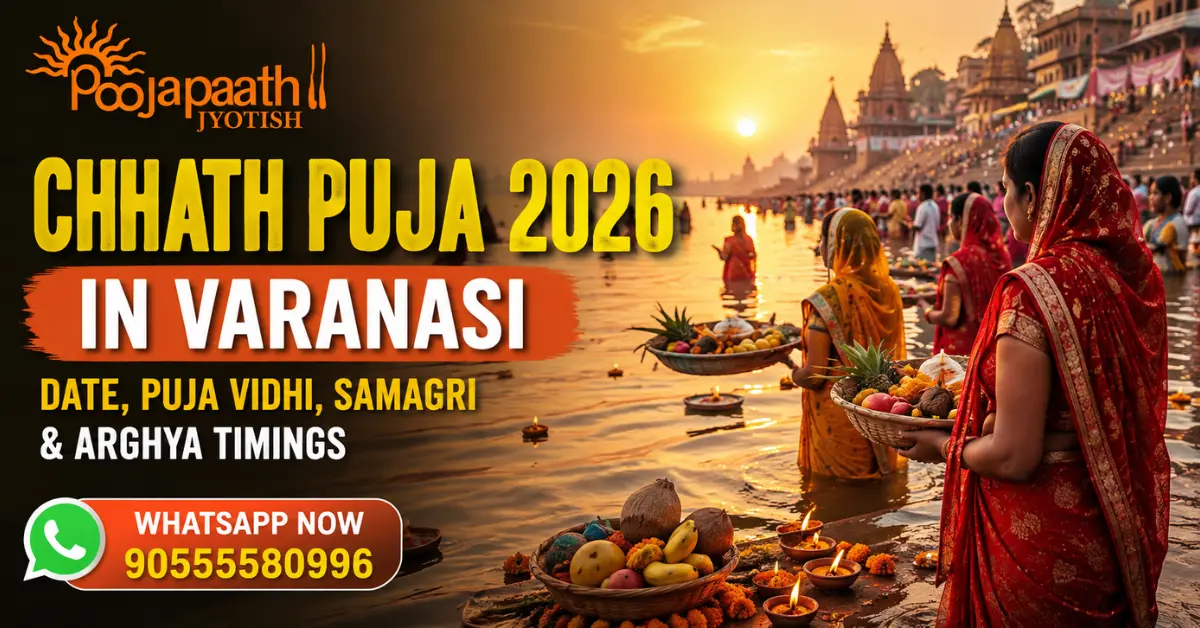
Chhath Puja 2026 begins on Friday, 13 November, and across Varanasi’s ghats the preparation for it starts days earlier — bamboo soop baskets get cleaned and aired out, sugarcane stalks appear in the markets near Chowk, and households start planning who will stand where along the Ganga for the evening Arghya. Chhath is unlike most festivals observed here: it asks nothing of temples or idols, only a river, the setting and rising sun, and a fast that very few other observances in the Hindu calendar can match for sheer discipline.
For families in Varanasi and the wider eastern Uttar Pradesh region, this is one of the most physically and emotionally demanding festivals of the year, built around four exact days and two precise moments — the sun going down, and the sun coming up. Getting the Varanasi-specific dates and Arghya timings right matters more here than in most other Puja planning, since the entire ritual is timed to the sky rather than a fixed clock hour. This guide lays out the confirmed 2026 schedule, the Vidhi, the Samagri, and what to prepare for, ghat-side or at home.
Chhath Puja 2026: Quick Answer
| Ritual | Date | Main Significance | Varanasi Timing |
| Nahay Khay | Friday, 13 Nov 2026 | Purifying bath and one pure meal | Day-time observance |
| Kharna | Saturday, 14 Nov 2026 | Day-long fast, broken at sunset with kheer | Evening, after sunset |
| Sandhya Arghya | Sunday, 15 Nov 2026 | Evening offering to the setting sun | Approx. 5:11 PM (sunset) |
| Usha Arghya | Monday, 16 Nov 2026 | Morning offering to the rising sun; fast broken | Approx. 6:15–6:20 AM (estimated, confirm locally) |
What Is Chhath Puja?
Chhath, also called Surya Shashthi, is a four-day festival of thanksgiving to Surya Dev, the Sun, and to Chhathi Maiya, who is worshipped alongside him. Unlike most Hindu worship, Chhath involves no idol and no temple — the sun itself, rising and setting over open water, is the object of devotion.
According to Hindu tradition, the festival expresses gratitude for the energy that sustains life, and is observed with a level of physical discipline that few other festivals ask for — a fast that can run without food or water for roughly 36 hours, broken only after the final morning offering. Families who observe Chhath describe it less as a request for something and more as a settling of thanks, a reminder of how directly daily life depends on the sun and on water.
How Is Chhath Puja Celebrated in Varanasi?
In Varanasi, Chhath is observed along the Ganga ghats as well as at smaller ponds and tanks across the city for families who cannot reach the main riverfront. In the days before the festival, households prepare bamboo soop and daura baskets, arrange fruits and sugarcane, and begin cleaning the kitchen and Puja area from the ground up, since Chhath places unusual emphasis on cleanliness through every stage of preparation.
On the evening of Sandhya Arghya, families walk to the ghats together, often carrying the full soop of offerings on their heads, and stand at the water’s edge as the sun goes down. The same happens again before dawn the next morning for Usha Arghya. Diyas are lit along the steps, and the atmosphere at the ghats during these two windows is intensely devotional, with entire families, including young children, taking part. Specific government arrangements, temporary ghat access, or crowd-management plans for 2026 have not been independently verified for this article and should be checked closer to the date through local municipal or news sources.
Chhath Puja 2026: Four-Day Ritual Schedule
Day 1: Nahay Khay — Friday, 13 November 2026
The observance opens with a purifying bath, traditionally in the Ganga where possible, followed by a single satvik meal prepared without onion, garlic, or excess spice. This meal is the last full food intake before the fasting days begin, and it sets the tone of cleanliness that continues through the rest of the festival.
Day 2: Kharna — Saturday, 14 November 2026
Vratis (those observing the fast) go without food or water through the day. In the evening, after sunset, the fast is broken with a simple meal — typically kheer made with jaggery, roti, and fruit — prepared with strict attention to cleanliness. Once this meal is eaten, the main 36-hour nirjala (waterless) fast begins and continues until the following morning’s Arghya.
Day 3: Sandhya Arghya — Sunday, 15 November 2026
This is the festival’s principal day. In the late afternoon, families carry their prepared Samagri to the riverbank or a chosen body of water, and as the sun sets, Arghya — an offering of water and Puja items — is made to Surya Dev. This is typically the most crowded and visually striking part of the festival at the Varanasi ghats, with diyas lit and the entire family standing together in the water.
Day 4: Usha Arghya — Monday, 16 November 2026
Families return to the same spot before sunrise for the second Arghya, this time offered to the rising sun. Once this offering is complete, the Vrati’s fast is formally broken — a moment known as Parana — usually with Prasad shared among family and neighbours. This closes the four-day observance.
Chhath Puja Arghya Timings 2026 in Varanasi
| Arghya | Date | Varanasi Timing |
| Sandhya Arghya (sunset) | Sunday, 15 November 2026 | Approximately 5:11 PM |
| Usha Arghya (sunrise) | Monday, 16 November 2026 | Approximately 6:15–6:20 AM (estimated — confirm with a local Panchang closer to the date) |
These are sunrise and sunset timings, not a separate Puja Muhurat — the Arghya itself is offered as the sun is at the horizon, so the exact minute matters more here than in festivals governed by a broader auspicious window. The Sandhya Arghya figure above is drawn from a Varanasi-specific source; the Usha Arghya figure is an estimate built from nearby verified locations since no directly-published Varanasi sunrise figure for this date was available at the time of writing. Treat the sunrise time as a close approximation and confirm it locally in the days before the festival.
Chhath Puja Samagri List 2026
- Bamboo soop (winnowing tray) and daura (bamboo basket)
- Seasonal fruits (banana, orange, coconut, and others per tradition)
- Sugarcane
- Thekua ingredients — wheat flour, jaggery, ghee
- Coconut
- Bananas
- Diyas
- Oil or ghee
- Flowers
- Turmeric plant with root
- Rice
- Milk
- Water for Arghya
- Vermillion (sindoor) and other traditional offerings per family custom
Samagri can vary meaningfully by family tradition and region — not every household includes every item on this list, and some families add items specific to their own Kul (family) practice. Treat this as a general starting checklist rather than a fixed requirement.
Chhath Puja Vidhi: Step-by-Step
- Preparation — clean the home and Puja area thoroughly in the days leading up to Nahay Khay.
- Nahay Khay — take a purifying bath and eat a single satvik meal.
- Kharna — observe a day-long fast, broken at sunset with kheer, roti, and fruit; the main 36-hour fast begins after this meal.
- Sandhya Arghya — carry the prepared soop to the riverbank or water source and offer Arghya to the setting sun.
- Usha Arghya — return before sunrise the next day and offer Arghya to the rising sun.
- Parana — break the fast after Usha Arghya, typically with Prasad shared among family.
Family Sampradaya can change small details within this sequence — some families include additional prayers or specific mantras passed down within their Kul. Where you are unfamiliar with a step, it is reasonable to ask an elder family member or a Pandit rather than follow a generic checklist exactly.
How Is Arghya Offered During Chhath Puja?
The Vrati and family members carry the soop, filled with fruits, sugarcane, and thekua, to the water’s edge. Standing in shallow water — not deep or fast-moving water — they offer Arghya by pouring water toward the sun with both hands while facing it, accompanied by prayer. This is repeated at both sunset and sunrise. Family members often stand alongside the Vrati, supporting the offering and sharing in the prayer, even if they are not observing the fast themselves.
Safety Note: Stand only in shallow, calm water within your depth, and keep young children within arm’s reach at all times. Ghat steps can be slippery, especially in crowded conditions — move carefully, and follow any instructions from local authorities or ghat volunteers regarding safe standing areas.
Chhath Puja Fasting and Traditional Practices
The Vrati observing Chhath undertakes one of the more demanding fasts in the Hindu calendar — a day of complete abstention on Kharna, followed by a roughly 36-hour nirjala fast from the Kharna evening meal until Usha Arghya. Cleanliness is treated with particular seriousness throughout, extending to the kitchen, clothing, and the Puja area itself, not just the act of worship.
People with medical conditions, pregnancy, or other health concerns should follow advice from their qualified healthcare professional and their family’s established religious practice. Chhath’s fasting discipline is significant, and decisions about whether and how to observe it are personal and, where relevant, medical ones.
Chhath Puja Preparation Checklist
7 Days Before
- Clean and air out the bamboo soop and daura.
- Begin planning which ghat or water body the family will use.
- Make a Samagri shopping list.
3 Days Before
- Buy fruits, sugarcane, and thekua ingredients.
- Confirm travel arrangements to the ghat, especially if coming from outside the city.
- Check the family’s diyas and oil supply.
1 Day Before
- Complete final Nahay Khay preparations.
- Prepare the kitchen for the Kharna meal.
- Pack the soop with offerings ready for the following evening.
Chhath Puja Day
- Leave for the ghat with enough time before sunset for Sandhya Arghya.
- Keep family members together at the water’s edge.
- Plan the return trip before sunrise the next morning for Usha Arghya.
Pandit Ji’s View on Chhath Puja
Pandit Ji’s View: Chhath is primarily about discipline and devotion, not decoration. Families sometimes get more anxious about the Samagri than the fast itself — the fast and the two Arghyas are the heart of it.
Pandit Ji’s View: Prepare Samagri well in advance. Thekua, fruit, and sugarcane all need proper time, and rushing this on the day itself adds unnecessary stress to an already demanding observance.
Pandit Ji’s View: Do not treat every online checklist as universally mandatory. Every Kul has its own small variations, and following your own family’s established practice matters more than matching a generic list exactly.
Pandit Ji’s View: Ganga rituals should be performed respectfully — this includes what you bring into the water and what you leave behind. Keep the ghat as clean as you found it.
Pandit Ji’s View: At crowded ghats, safety comes first. Stay within your depth, keep children close, and do not rush the Arghya just because the crowd is moving.
Chhath Puja at the Ganga Ghats in Varanasi
The Varanasi ghats take on a distinct atmosphere during Chhath — rows of families standing in the shallows at dusk and dawn, soop baskets balanced and offered together, and diyas lining the steps. This is a quieter, more family-centred devotional scale than the citywide spectacle of Dev Deepawali two weeks later, closer in feel to a shared neighbourhood ritual repeated at every ghat along the river.
Specific details for 2026 — crowd volumes, any temporary ghat arrangements, or road and traffic management around the main riverfront — have not been verified for this article and should not be assumed from previous years. Check current municipal or local news sources closer to the festival for practical planning.
For the city’s other major riverside lighting festival, see our guide to Dev Deepawali 2026 in Varanasi, observed on Kartik Purnima, 24 November 2026 — a separate festival from Chhath, centred on Deepdan rather than the Surya Arghya.
Do You Need a Pandit for Chhath Puja?
Chhath is traditionally a family-led observance in many communities, passed down through direct practice rather than requiring a priest to conduct each step. Most families perform the entire four-day sequence themselves, guided by what elders in the family have always done.
That said, a Pandit can be genuinely useful in certain situations — for a formal Sankalp, for families newer to the procedure who want guidance through each step, or for complementary Puja rituals performed alongside the Chhath observance. A Pandit is not mandatory for Chhath in the way one might be for a home Griha Pravesh, but is a helpful option rather than a required one.
How to Book a Pandit for Puja in Varanasi
- Decide the specific ritual you want guidance or assistance with.
- Confirm your date against the 2026 Chhath schedule.
- Confirm the exact timing you need the Pandit available for.
- Discuss the Vidhi and any family-specific requirements.
- Confirm the Samagri and who is arranging it.
- Share your location — home, a specific ghat, or elsewhere.
- Confirm the Pandit’s availability for your date, since Chhath season is a busy period.
- Complete the booking ahead of the festival.
For a Pandit experienced in Vedic ritual guidance across Chhath and other observances, see our Puja Pandit in Varanasi service.
Get remote coordination, families outside Varanasi can also arrange this through our online Pandit booking page.
For the full range of Vedic Puja and Pandit booking options in the city, see our Vedic Puja Booking in Varanasi guide.
Frequently Asked Questions
When is Chhath Puja 2026?
Chhath Puja 2026 runs over four days from Friday, 13 November to Monday, 16 November 2026. The main Sandhya Arghya, the festival’s principal evening offering, falls on Sunday, 15 November 2026.
When is Chhath Puja in Varanasi?
The dates are the same nationally, since they follow the Panchang tithi rather than the city. In Varanasi, Nahay Khay is on 13 November, Kharna on 14 November, Sandhya Arghya on 15 November, and Usha Arghya on 16 November 2026.
What are the four days of Chhath Puja?
The four days are Nahay Khay (purifying bath and one pure meal), Kharna (a day-long fast broken at sunset with kheer and roti), Sandhya Arghya (the evening offering to the setting sun), and Usha Arghya (the morning offering to the rising sun, followed by Parana, when the fast is broken).
When is Sandhya Arghya in 2026?
Sandhya Arghya falls on Sunday, 15 November 2026. In Varanasi, sunset on that date is estimated at approximately 5:11 PM, based on confirmed local solar data, though this should be checked against a current Panchang closer to the date.
When is Usha Arghya in 2026?
Usha Arghya falls on Monday, 16 November 2026, at sunrise. For Varanasi, sunrise that morning is estimated at approximately 6:15 to 6:20 AM, based on geographic interpolation from nearby verified locations, since no directly published Varanasi-specific figure was available at the time of writing. Confirm the exact minute locally before the day.
What Samagri is needed for Chhath Puja?
Common items include a bamboo soop and daura, seasonal fruits, sugarcane, thekua ingredients, coconut, bananas, diyas, oil or ghee, turmeric, rice, and milk. Exact Samagri can vary by family tradition and region, so not every household uses every item.
What is Kharna?
Kharna is the second day of Chhath Puja, involving a day-long fast that is broken only after sunset with a simple meal of kheer, roti, and fruit. After this meal, the main 36-hour nirjala fast begins, continuing until Usha Arghya on the fourth day.
What is the significance of Arghya during Chhath Puja?
Arghya is the ritual offering of water and Puja items to the Sun, performed once at sunset (Sandhya Arghya) and once at sunrise (Usha Arghya). It expresses gratitude to Surya Dev for sustaining life, and together the two Arghyas mark the completion of the Chhath vrat.
Can Chhath Puja be performed at home?
Yes, for families who cannot reach a river or public ghat, Chhath Puja can be performed at home using a clean water source such as a large tub, provided the core rituals and fasting discipline are maintained according to family tradition.
Can I book a Pandit for Puja in Varanasi?
Yes. While Chhath is traditionally a family-led observance, a Pandit can assist with Sankalp, specific prayers, or complementary rituals for families who want additional guidance.
Prepare for Chhath Puja 2026 with Confidence
Chhath Puja 2026 runs from Nahay Khay on 13 November through Usha Arghya and Parana on 16 November, with the main Sandhya Arghya falling on Sunday, 15 November. Getting the Varanasi-specific Arghya timings right, preparing Samagri in advance, and following the discipline of the fast with proper safety at the ghats all make this demanding but deeply meaningful festival easier to observe well.
If your family needs help arranging any Puja or Pandit guidance around Chhath season in Varanasi, Pooja Paath Jyotish can help you understand the available options.