
Blog
Dev Deepawali 2026 in Varanasi: Date, Puja & Deepdan Guide

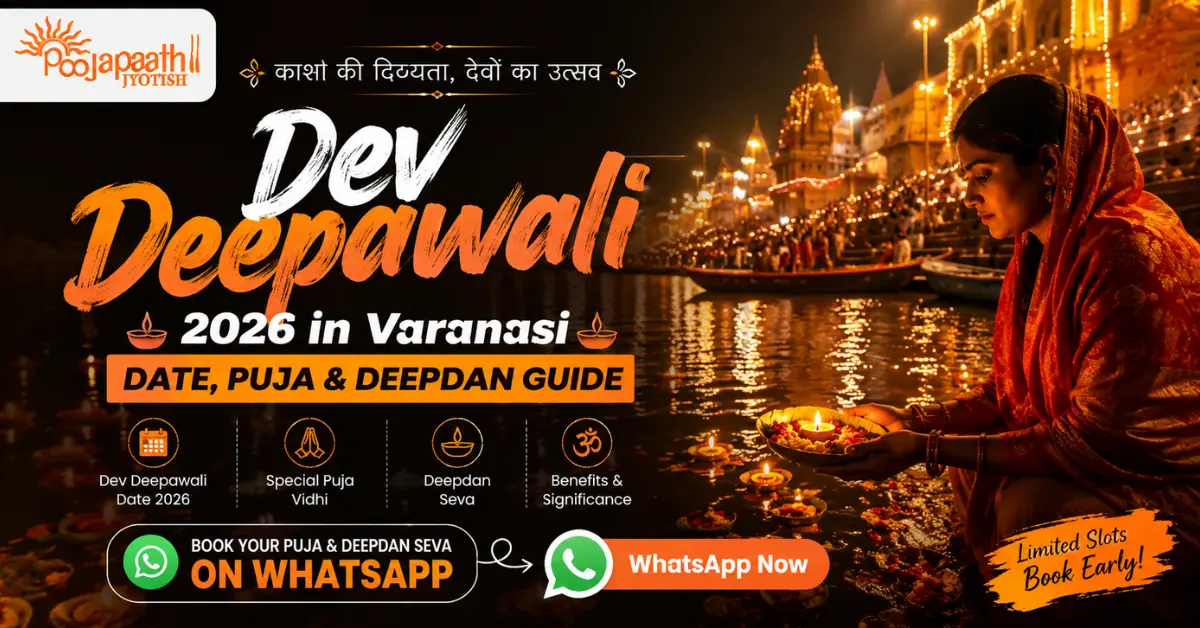
Dev Deepawali 2026 in Varanasi: Date, Puja, Deepdan & Kashi Guide
Kashi waits all year for one night. Fifteen days after Diwali, when most of India has already packed away its diyas, Varanasi lights lakhs more of them along the Ganga. Dev Deepawali 2026 falls on Tuesday, 24 November, and in this city it is not a smaller version of Diwali — it is its own festival, built around the belief that the gods themselves come down to bathe in the river on this night.
Every ghat, from Assi to Panch Ganga, is lined with earthen lamps. Temples glow, conch shells sound across the water, and families who have performed a Puja earlier in the day come to the steps in the evening for Deepdan. Pilgrims arrive from across the country specifically for this one evening, and for many Varanasi residents, it is the most anticipated night of the Kartik month.
Quick Answer: When Is Dev Deepawali 2026?
Dev Deepawali 2026 falls on Tuesday, 24 November 2026, observed on Kartik Purnima. The Pradoshkal Muhurat is commonly cited as approximately 5:08 PM to 7:47 PM IST, though this can shift slightly by source and location — confirm against a local Panchang closer to the date. The main celebration is centred on the Ganga ghats of Varanasi.
What Is Dev Deepawali?
Dev Deepawali literally means “the Diwali of the gods.” According to traditional Hindu belief, it marks the day the Devas descended to Kashi to celebrate Bhagwan Shiva’s victory over the demon Tripurasura, and lit lamps along the Ganga in celebration. This is why the day is also known as Tripurotsav or Tripurari Purnima.
The festival falls on Kartik Purnima, the full moon that closes the Kartik month, exactly fifteen days after Diwali. While Diwali is observed across homes in India on Amavasya (the new moon), Dev Deepawali is tied to a specific tithi and, more than any other city, to a specific place — the ghats of Varanasi.
Some traditions also connect this Purnima to the birth of Bhagwan Vishnu’s incarnation as a fish, and to Guru Nanak Jayanti, which falls on the same date. In Kashi, however, the dominant association remains Shiva’s victory and the descent of the gods to the Ganga.
Dev Deepawali vs Diwali
| Aspect | Diwali | Dev Deepawali |
| Date/Tithi | Kartik Amavasya (new moon) | Kartik Purnima (full moon) |
| Timing gap | — | 15 days after Diwali |
| Main deity | Devi Lakshmi | Bhagwan Shiva (Tripurasura victory) |
| Core ritual | Lakshmi Puja at home | Deepdan and Ganga worship at the ghats |
| Where it is biggest | Pan-India, home-centred | Varanasi, riverfront-centred |
| Lighting of diyas | Homes, doorways, balconies | Ghats, temple steps, riverbanks |
Families new to the festival often ask if Dev Deepawali is simply a second Diwali. It is not. The deity, the tithi, and the setting are all different, and treating the two as interchangeable misses what makes Dev Deepawali distinct: it is fundamentally a riverfront festival, not a household one.
Dev Deepawali 2026 Date in Varanasi
Dev Deepawali 2026 falls on Tuesday, 24 November, the date of Kartik Purnima this year. The date moves each year because it follows the lunar Hindu calendar rather than the fixed Gregorian one — Purnima tithi does not land on the same Gregorian date every year, which is why the festival can fall anywhere from late October to early December depending on the calendar cycle.
For 2026, multiple Panchang-based sources converge on 24 November, with the Pradoshkal window (the auspicious evening period spanning sunset) commonly listed around 5:08 PM to 7:47 PM IST. As with any tithi-based festival, exact start and end times for the Purnima itself can vary slightly between Panchang calculation methods, so it is worth checking a current local Panchang in the days before the festival rather than relying on any single source months in advance.
Why Dev Deepawali Is Special in Varanasi
Varanasi is where Dev Deepawali is observed at a scale unmatched anywhere else in India. The belief that the gods descend specifically to Kashi gives the festival a devotional weight here that it does not carry elsewhere. Along the Ganga, the ghats become the stage — diyas are placed step by step along the stone ghats, temples along the riverfront are lit from base to spire, and the evening air fills with the sound of shankh, temple bells, and chanting.
What makes the Varanasi celebration distinct is the sheer density of participation across a single stretch of riverfront. Boats fill the Ganga to give visitors a view from the water, and residents who have lived along the ghats for generations treat the evening as the culmination of the entire Kartik month, not a standalone event.
What Happens at the Ghats During Dev Deepawali?
As dusk settles, ghat after ghat along the Ganga is progressively lit with diyas, placed by residents, temple staff, and visiting devotees. Deepdan is performed at the water’s edge, families offer prayers to the Ganga, and cultural programs are held at some ghats in the years they are organised — though not every ghat hosts the same activity, and specific event schedules should be checked closer to the date rather than assumed.
Pilgrims and visitors gather in large numbers, particularly around the main ghats, to witness the lamps reflected on the water. Priests conduct evening Aarti at several points along the river, and many families combine their visit with a boat ride to see the full stretch of lit ghats from the Ganga itself.
Dev Deepawali Puja Vidhi
The Puja sequence below reflects the general practice followed across most family traditions. Exact steps, mantras, and order can vary according to family Sampradaya and the specific Sankalp being taken, so treat this as a practical outline rather than a fixed script.
- Clean the Puja area or altar space thoroughly before starting.
- Take a formal Sankalp, stating the purpose of the Puja.
- Begin with Ganesh Puja, where this is part of the family’s practice.
- Worship Bhagwan Shiva, Devi, or Ganga according to family tradition.
- Prepare the diyas — clean the earthen lamps, fit cotton wicks, and fill with oil or ghee.
- Perform Deepdan, offering the lit diyas at the chosen sacred space.
- Recite mantras or japa as per family or Pandit guidance.
- Conclude with Aarti.
- Distribute Prasad to those present.
Pandit Ji’s View: Dev Deepawali is not only about lighting lamps. Every diya placed on the ghat carries a Sankalp behind it — a stated intention. Families who understand what they are offering, and why, take far more from the evening than those who only come to watch the lights.
Dev Deepawali Deepdan: Meaning and Vidhi
Deepdan means the ritual offering of a lit lamp as an act of devotion. On Dev Deepawali, it is traditionally performed at the Ganga ghats, where devotees place diyas along the steps or set them afloat on the water as an offering to the river.
A basic Deepdan involves cleaning the diya, fitting a cotton wick, filling it with oil or ghee, lighting it with intention, and placing or releasing it respectfully at the water’s edge. Handle the flame carefully in crowded conditions, and never leave a lit diya unattended near flammable material.
If you are floating a diya on the Ganga, use only biodegradable materials — an earthen diya with a cotton wick and natural oil. Do not release plastic, thermocol, or any non-biodegradable material into the river; these materials do not dissolve, harm the Ganga’s ecosystem, and go directly against the spirit of an offering meant to honour the river.
Dev Deepawali Puja Samagri List
The exact Samagri required depends on which specific Puja your family is performing, but the following items cover most home and ghat-side Dev Deepawali rituals.
- Diyas (earthen lamps)
- Cotton wicks
- Oil or ghee
- Flowers
- Roli and kumkum
- Akshat (unbroken rice)
- Incense (agarbatti/dhoop)
- Fruits
- Sweets for Prasad
- Kalash, where required by the specific Puja
- Gangajal, where traditionally used
- Chunari, where relevant to the worship
Dev Deepawali 2026 Muhurat in Varanasi
The Pradoshkal period — the evening window spanning sunset that is considered auspicious for Kartik Purnima worship — is commonly cited for Dev Deepawali 2026 as approximately 5:08 PM to 7:47 PM IST. This is the window most families and ghat celebrations align with for evening Puja and Deepdan.
Dev Deepawali 2026 Muhurat is approximately 5:08 PM to 7:47 PM IST on 24 November, based on the Pradoshkal period around sunset. Panchang calculation methods can differ slightly by source and location, so confirm the exact timing against a current local Panchang closer to the date rather than relying on an estimate made months in advance.
Pandit Ji’s View: Families should confirm the correct Muhurat rather than relying on random timings found online months in advance. Panchang calculations can shift by a few minutes to a few hours depending on the source and your exact location — check closer to the date, or ask a Pandit to confirm it for your specific city.
Dev Deepawali and Ganga Aarti in Varanasi
Ganga Aarti is performed daily at several ghats in Varanasi, and on Dev Deepawali evening it becomes part of a much larger riverfront celebration rather than a standalone event. The regular Aarti at ghats such as Dashashwamedh continues on this night, but it takes place alongside the wider lighting of diyas across the riverfront, making the evening far busier and more elaborate than a typical day’s Aarti.
Do not assume a fixed, festival-specific Aarti time without checking current information for 2026 — regular Aarti schedules can shift on major festival evenings due to crowd volume, and any special event timing at a particular ghat should be verified closer to the date rather than assumed from past years.
How to Experience Dev Deepawali in Varanasi
- Arrive at the ghats well before sunset — the crowd builds quickly as dusk approaches.
- Expect very heavy footfall, especially near the main ghats; plan extra time to walk between locations.
- Dress modestly and comfortably, since you will likely be standing or walking for extended periods.
- Keep belongings secure and minimal — avoid carrying anything you cannot keep an eye on in a crowd.
- Follow local authority and volunteer instructions near the water’s edge without exception.
- Avoid stepping into or blocking active ritual spaces where families are performing Puja or Deepdan.
- Plan transportation in advance, since roads near the ghats get congested well before the evening peak.
- Check current local event information for the specific ghat you plan to visit, rather than relying on previous years’ schedules.
Can You Perform Dev Deepawali Puja at Home?
Yes. A simple home Puja is entirely appropriate for Dev Deepawali, even for families who cannot travel to Varanasi. Lighting diyas at home, offering prayers according to family tradition, and performing a small Aarti carries the same devotional intent as a ghat-side celebration.
Where a family wants a more elaborate procedure — a formal Sankalp, guided Deepdan, or a fuller Vedic sequence — a qualified Pandit can guide the ritual step by step, whether in person or over a video call, so the family understands what each part of the Puja means rather than simply following instructions.
How to Book a Pandit for Dev Deepawali Puja in Varanasi
- Decide which Puja your family wants performed for Dev Deepawali.
- Confirm the date — 24 November 2026 for the main festival, or an alternate date if performing the Puja separately.
- Confirm the Muhurat with the Pandit for your specific location.
- Explain your family’s requirements — tradition, language preference, and number of participants.
- Confirm the Samagri list and who is arranging it.
- Confirm the location — at the ghats, at a temple, or at home.
- Confirm the expected duration of the Puja.
- Confirm all booking details in writing before the day of the festival.
For families wanting an experienced local priest to guide the Sankalp and Deepdan correctly, our Puja Pandit in Varanasi service covers this and similar Vedic rituals throughout the year.
Can You Book a Pandit Online for Dev Deepawali?
Yes, for families who cannot be in Varanasi on the day or want to arrange the Puja in advance. The process generally starts with an enquiry sharing your preferred date and requirements, followed by discussion of the specific Puja, Samagri, and Muhurat, with coordination handled online before the ritual itself takes place.
You can start this process through our online Pandit Ji booking page, where remote participation is supported for families who cannot travel.
Pandit Ji’s View: A Pandit should explain the Puja, not leave the family confused or anxious about getting it wrong. If a priest cannot answer a simple question about why a step is being performed, that is worth asking about before the ritual begins.
Responsible Dev Deepawali Celebrations
- Do not throw plastic, thermocol, or other non-biodegradable material into the Ganga.
- Use only earthen diyas and natural materials for any lamp offered to the river.
- Follow local authority and crowd-management instructions at all times.
- Keep diyas and open flames away from flammable materials, clothing, and decorations.
- Respect restricted or roped-off areas near the ghats.
- Avoid overcrowding narrow ghat steps — wait for space rather than pushing forward.
Local Travel and Getting Around During Dev Deepawali
Roads and lanes near the main ghats get heavily congested from the afternoon of Dev Deepawali onward, and parking near the riverfront becomes difficult well before sunset. Visitors coming from outside Varanasi, or those planning to combine the festival with sightseeing across the city, generally find it easier to arrange a car and local guide in advance rather than navigating festival-day traffic on arrival.
For visitors who want reliable local transport and route planning around the Dev Deepawali crowds, Taxi Kashi’s guide to the best travel agency in Varanasi is a useful resource for arranging a car and driver familiar with the ghat-area routes.
Frequently Asked Questions
When is Dev Deepawali 2026?
Dev Deepawali 2026 falls on Tuesday, 24 November 2026, observed on Kartik Purnima. As with any Panchang-based date, always confirm the exact tithi timing with a local calendar closer to the date, since tithi start and end times can shift the observance by a few hours depending on region.
Why is Dev Deepawali famous in Varanasi?
Varanasi is where Dev Deepawali is celebrated on the grandest scale in India. According to tradition, the gods themselves descend to bathe in the Ganga on this night, and the city’s ghats are lit with lakhs of diyas in response, making Kashi the most recognised centre for this festival.
Is Dev Deepawali the same as Diwali?
No. Diwali falls on Amavasya (new moon) in Kartik and is centred on Lakshmi Puja at home. Dev Deepawali falls fifteen days later, on Kartik Purnima (full moon), and is centred on Deepdan and Ganga worship at the ghats, mainly in Varanasi.
What is Deepdan?
Deepdan is the ritual offering of lit diyas, traditionally placed at a temple, riverbank, or sacred space as an act of devotion. On Dev Deepawali, Deepdan is performed along the Ganga ghats of Varanasi as part of the evening worship.
When is Kartik Purnima in 2026?
Kartik Purnima in 2026 falls on 24 November, the same date as Dev Deepawali, since Dev Deepawali is observed specifically on this Purnima tithi.
What Puja is performed on Dev Deepawali?
Families typically perform a Sankalp, worship according to their tradition (often including Shiva, Ganga, or Devi worship), light diyas, perform Deepdan, and conclude with Aarti and Prasad. The exact sequence can vary by family Sampradaya.
Can Dev Deepawali Puja be performed at home?
Yes. A simple home Puja with diya lighting, prayer, and Aarti is traditionally appropriate. Families wanting a more elaborate Vedic procedure, including a formal Sankalp and Deepdan guidance, can consult a qualified Pandit.
Can I book a Pandit for Dev Deepawali in Varanasi?
Yes. You can arrange a Pandit for Dev Deepawali Puja in Varanasi by sharing your preferred date, Puja requirements, and family details in advance so the booking and Muhurat can be confirmed ahead of the festival.
What Samagri is needed for Dev Deepawali Puja?
Common items include diyas, cotton wicks, oil or ghee, flowers, roli, akshat, incense, fruits, and Prasad, with Gangajal and a kalash where the family tradition calls for them. The exact Samagri list depends on the specific Puja being performed.
What should visitors know before going to the Varanasi Ghats?
Expect large crowds, arrive early for a good vantage point, dress modestly, keep belongings secure, avoid stepping into active ritual spaces, and follow local authority instructions, especially near the water’s edge.
Celebrate Dev Deepawali in the Spirit of Kashi
Dev Deepawali 2026 falls on 24 November, fifteen days after Diwali, on the Purnima of Kartik. In Varanasi, it is the night the ghats along the Ganga are lit end to end with diyas, Deepdan is offered to the river, and families and pilgrims gather for one of the city’s most significant evenings of the year — whichever Puja tradition they follow.
Whether you are planning to attend at the ghats or perform a Puja at home, understanding the Vidhi, the Muhurat, and the meaning behind Deepdan makes the evening more than a spectacle to watch.
If you are planning a Dev Deepawali Puja in Varanasi and need help understanding the Puja or Pandit booking process, Pooja Paath Jyotish can help you explore the available options.