
Blog
Rudrabhishek Puja in Varanasi: Types, Process and Pricing for a Shiva Abhishek in Kashi

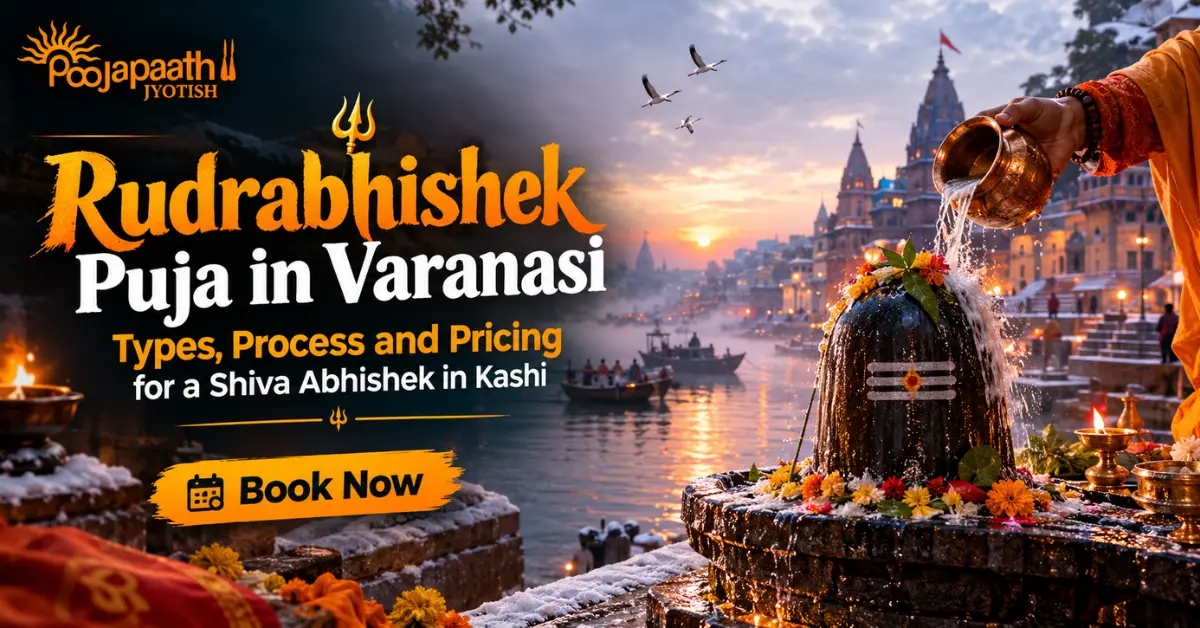
Varanasi is Lord Shiva’s own city, and nowhere is that felt more directly than in the Rudrabhishek — the ritual bathing of the Shivling with sacred substances while the Rudram is chanted from the Yajurveda. Our purohits perform Rudrabhishek through the year, both near the Kashi Vishwanath corridor and at homes, hotels and venues across the city, for devotees seeking health, protection, or simply a deeper connection with Baba Vishwanath. This guide explains what the puja involves, the different scales it can be performed at, and current pricing for booking a verified pandit in Varanasi.
What Is Rudrabhishek and Why Kashi Is the Ideal Place for It
Rudra is the fierce, primordial form of Shiva invoked in the Vedas, and Abhishek means the ritual anointing or bathing of his image. A Rudrabhishek is therefore the act of pouring sanctified substances over a Shivling while reciting the Namakam and Chamakam — the eleven anuvakas of the Sri Rudram — verses that are among the oldest surviving Vedic hymns to Shiva. Kashi Khand describes every Shivling installed in Varanasi as carrying a heightened potency because the city itself is considered Shiva’s own abode, which is why devotees travel from across India specifically to have this puja performed here rather than at a local temple.
The Meaning Behind Each Abhishek Dravya
Each substance poured during the abhishek carries its own symbolism, and a traditional Rudrabhishek typically moves through several of these in sequence:
- Gangajal — purification of the self and the space
- Panchamrit (milk, curd, ghee, honey and sugar) — nourishment and the sweetness of a well-lived life
- Raw milk — peace of mind and emotional balance
- Honey — harmony in relationships and speech
- Sugarcane juice — removal of bitterness and ego
- Bhasma (sacred ash) — detachment and a reminder of life’s impermanence
- Bel patra and dhatura — Shiva’s favoured offerings, believed to cool his fierce energy
The Scriptural Roots of the Rudram
The Namakam and Chamakam that form the heart of a Rudrabhishek are drawn from the Krishna Yajurveda, making them among the oldest continuously recited hymns in the Vedic corpus. The Namakam addresses Rudra by over a hundred names and forms, acknowledging him as present in every corner of existence — in the forest and the marketplace, the mountain and the river, the healer and the hunter alike — which is part of why the hymn is considered universally applicable to almost any sankalp. The Chamakam that follows is structured as a list of worldly and spiritual wishes offered for the devotee’s wellbeing, from food and cattle to knowledge and long life. Reciting both together, as is done in a full Rudrabhishek, is considered more complete than either alone, which is why our pandits always perform them as a pair rather than reciting the Namakam in isolation.
Common Life Situations Families Book a Rudrabhishek For
While many devotees book a Rudrabhishek simply as a regular act of devotion, a large share of our bookings are tied to a specific life situation. These typically include recovery from a prolonged illness, a family member facing an upcoming surgery, repeated delays or obstacles in a pending legal or property matter, the start of a new job or business venture, and milestones such as moving into a new home or finalising a wedding date. In each case, the sankalp is adjusted to reflect the specific intention, and the pandit will usually discuss this with the family before the puja begins so the Chamakam portion can be recited with the right focus.
Types of Rudrabhishek We Perform
Not every family needs the same scale of ritual, so our pandits offer a few distinct formats depending on the sankalp and the occasion:
- Laghu Rudra — a shorter format with a single pandit reciting one or a few rounds (avartan) of the Rudram; suited to a quick, personal abhishek or a weekly Somvar vrat.
- Eka Rudrabhishek — one complete round of Namakam-Chamakam performed by a single pandit, the most commonly booked format for personal wellbeing, new ventures, or before an important decision.
- Maha Rudrabhishek / Ekadash Rudrabhishek — eleven rounds of the Rudram recited together by a team of pandits (traditionally eleven), reserved for serious health concerns, major family sankalps, or when a particularly powerful remedy is sought.
- Rudrabhishek with Mahamrityunjaya Havan — a combined sankalp that pairs the abhishek with the Mahamrityunjaya mantra havan; families dealing with a health crisis often choose this over either ritual alone, and it mirrors the combined approach covered in our Mahamrityunjaya Jaap guide.
Step-by-Step: What Happens During the Puja
- Sankalp — the pandit takes a formal resolution naming the devotee, gotra, and the purpose of the abhishek.
- Ganesh Puja — a brief invocation to Lord Ganesha to clear obstacles before the main ritual begins.
- Abhishek sequence — Gangajal, panchamrit, milk, honey, sugarcane juice and bhasma are poured over the Shivling in turn, each accompanied by mantra.
- Namakam and Chamakam recitation — the core Vedic chant, repeated once for Eka Rudrabhishek or eleven times for Maha Rudrabhishek.
- Bel patra, flowers and dhatura offering — placed on the lingam once the liquid abhishek is complete.
- Aarti and prasad — the ceremony closes with aarti and distribution of prasad to those present.
Best Days and Occasions for Rudrabhishek in Varanasi
Monday (Somvar) and Pradosh Vrat days are considered especially suited to Shiva worship, and the month of Shravan and the day of Mahashivratri see the highest demand for Rudrabhishek bookings in the city. Beyond the calendar, families also book a Rudrabhishek around personal milestones — before a wedding for family harmony (a ritual many couples pair with the vivah puja and vivah muhurat booking process), at the start of a new venture, or during a health concern where recovery is the primary sankalp.
Where It Is Performed — At Kashi Vishwanath or at Your Venue
Many devotees prefer to have the Rudrabhishek performed at the Kashi Vishwanath temple itself, where our team can coordinate the temple-side formalities and pandit arrangement on your behalf. For families who cannot visit, or who want the ritual performed at home, a Parthiv Shivling (a lingam made of consecrated clay) is prepared at the venue specifically for the abhishek, following the same Vedic procedure — a common and well-accepted practice when a permanent lingam isn’t available on site.
What to Expect If You’re Booking on Someone Else’s Behalf
It’s common for devotees to book a Rudrabhishek for a parent, spouse or relative who cannot travel to Varanasi or isn’t well enough to attend in person. In these cases, the sankalp is taken in the name and gotra of the person the puja is for, with a family member present locally if possible, or entirely managed by our pandit team if no one is able to attend. We record the key portions of the ritual — the abhishek sequence and the closing aarti — and share this with the family afterward, along with prasad that can be couriered on request for an additional charge.
Rudrabhishek During Shravan: What’s Different
Shravan is the month most closely associated with Shiva worship across North India, and in Varanasi this translates into a noticeable rise in Rudrabhishek bookings, particularly on each Monday of the month. Many families choose to perform a Rudrabhishek on all four or five Mondays of Shravan as a single extended sankalp rather than a one-off ritual, and some extend this further into a Kanwar-linked offering where Gangajal is carried and offered at a Shiva temple as part of the same devotional period. Because demand is highest during this window, we recommend confirming your preferred date and pandit at least a week in advance if you want a specific Monday, and earlier still if the puja is to be performed at the Kashi Vishwanath temple itself rather than at your venue.
Rudrabhishek Puja Pricing in Varanasi
| Package | Price Range (INR) |
| Laghu Rudrabhishek (1 pandit, short format) | ₹1,100 – ₹2,100 |
| Eka Rudrabhishek (1 pandit, full Namakam-Chamakam) | ₹2,100 – ₹5,100 |
| Eka Rudrabhishek with Mahamrityunjaya sankalp | ₹5,100 – ₹11,000 |
| Maha / Ekadash Rudrabhishek (team of pandits) | ₹21,000 – ₹51,000 |
Pricing depends on the venue (temple vs. home/hotel), number of pandits, whether a Parthiv Shivling needs to be prepared, and the samagri used.
Rudrabhishek Across Varanasi and Nearby Temples
Beyond the Kashi Vishwanath corridor, our pandits regularly perform Rudrabhishek at home or venue across Sigra, Lanka, Bhelupur, Cantonment and Shivpur, and travel to devotees in nearby districts — see our pandit booking coverage for nearby Varanasi districts for details.
Combining Rudrabhishek With Other Remedial Poojas
A Rudrabhishek is often the starting point for a broader remedial plan rather than a one-time ritual. Families dealing with recurring health issues frequently pair it with a Mahamrityunjaya Mantra Jaap, while those whose kundli shows a planetary affliction alongside the health concern are often guided toward our Kaal Sarp Dosh puja guide as a complementary remedy. If you are unsure which combination fits your situation, a Vedic astrology consultation before booking can help clarify the right sankalp.
How to Book a Pandit for Rudrabhishek in Varanasi
Share your preferred date, the format you’d like (Laghu, Eka or Maha Rudrabhishek), and whether it should be at the temple or your venue, and our team will confirm a verified pandit and the samagri list. Our step-by-step guide to booking a pandit online in Varanasi walks through the process, or you can book directly via online pandit ji booking. You can also read more about why families choose our pandits for Vedic pooja services.
Frequently Asked Questions
- What is the difference between Eka Rudrabhishek and Maha Rudrabhishek?
Eka Rudrabhishek involves one complete round of the Rudram recited by a single pandit, while Maha or Ekadash Rudrabhishek involves eleven rounds, usually chanted by a team of pandits together, and is reserved for more serious or collective sankalps.
- Can Rudrabhishek be performed without visiting a temple?
Yes. A Parthiv Shivling can be prepared at your home, hotel or venue specifically for the ritual, and the full Vedic procedure is followed exactly as it would be at a temple.
- Is there a best day to book a Rudrabhishek puja?
Monday and Pradosh Vrat days are traditionally preferred for Shiva worship, and the Shravan month and Mahashivratri see the heaviest demand, so booking a few days ahead during these periods is advisable.
- Does the Rudrabhishek package include puja samagri?
Yes, core samagri such as Gangajal, panchamrit ingredients, bel patra and flowers is included in our packages; specific additional items requested by the family are quoted separately.
- Can Rudrabhishek be combined with a Mahamrityunjaya Jaap in one sankalp?
Yes, this is one of our most requested combinations for families dealing with a health concern, and the pandit will structure the sankalp and sequence of both rituals accordingly.
- How long does a typical Eka Rudrabhishek take?
A single-pandit Eka Rudrabhishek usually takes 60 to 90 minutes from sankalp to aarti; Maha Rudrabhishek with a team of pandits can take 2 to 4 hours depending on the sankalp.
- Do you provide a video or recording of the puja for devotees who cannot attend?
Yes, for Rudrabhishek performed on your behalf, our team shares a video of the key rituals and the concluding aarti after the puja is completed.
Many devotees visiting for Rudrabhishek extend their trip for a Kashi Vishwanath darshan and a walk along the ghats — general Varanasi travel and darshan planning resources are available on indiscover.in.
Related Posts

Rudrabhishek Puja in Varanasi: Complete Guide to Booking, Cost & Benefits (2026)
-
Posted by
 Pooja Paath Jyotish